ServicesCommercial Roofing
Commercial Roofing in Zebulon
We repair and replace flat and low-slope roofs on existing shops, offices and small commercial buildings. Each visit begins up on the roof itself. You receive photos of every problem we find, along with our honest view of whether targeted repairs are enough or the membrane is worn out.
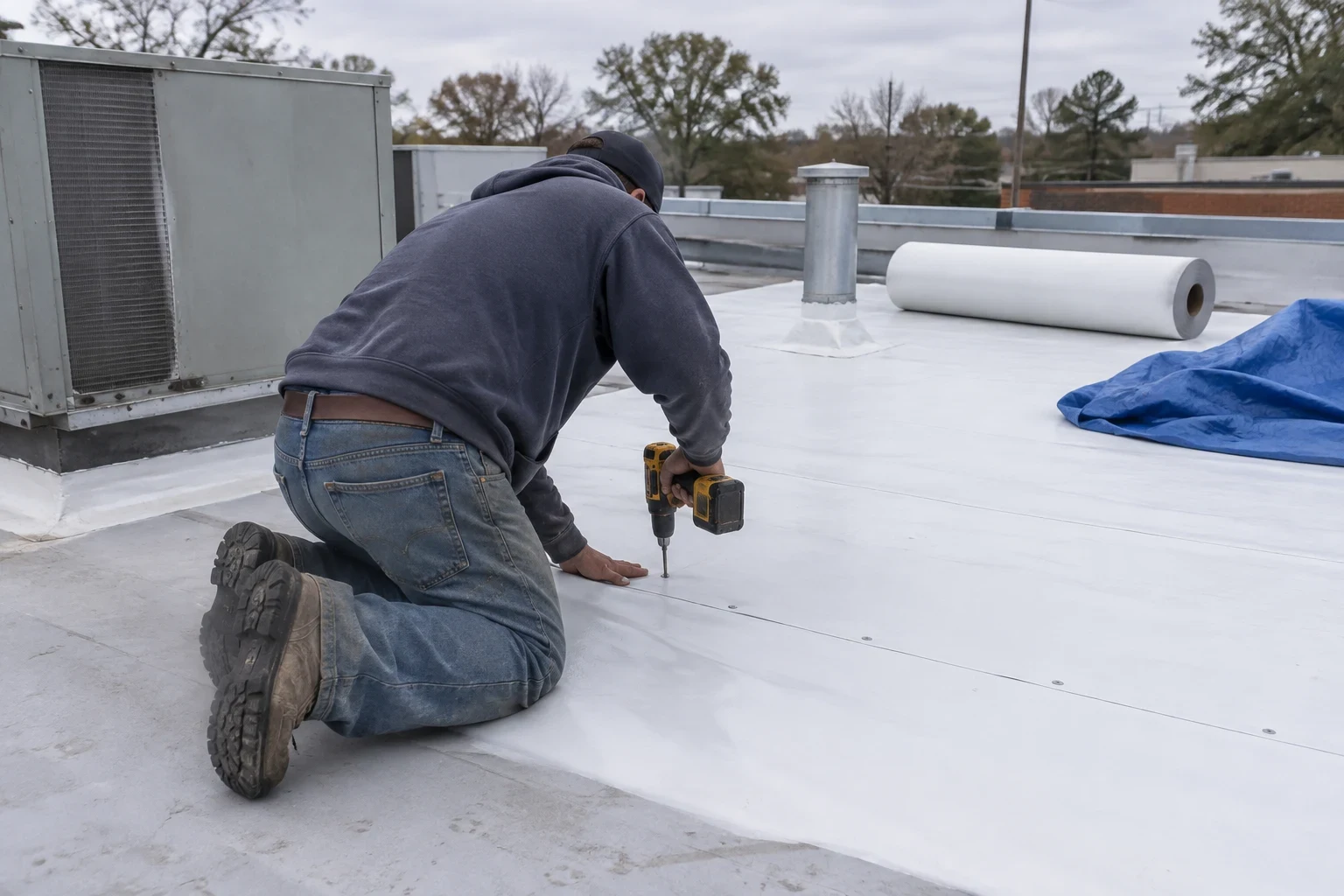
Roofing for the building you already own
Low-slope roofs fail differently from shingled ones. Water does not run off quickly, so small faults at seams, drains and rooftop units turn into ceiling stains, wet insulation and damaged stock long before anyone sees the roof itself.
Our commercial roofing work covers the roof you have today: finding leaks, repairing membranes and flashing, and replacing systems that are past saving. We do not build new structures or take on general construction. We focus on keeping the roof over your business dry and sound.
There is a running-cost side too. A dark, aging roof soaks up heat through a North Carolina summer and passes it straight into the space below. A reflective membrane over dry, properly thick insulation can ease the load on your cooling equipment, and we will tell you honestly when that difference is worth paying for.
What the work includes
Leak tracing
On a low-slope roof, the drip inside is rarely right below the opening. Water slides along the deck and insulation before it finds a way down, so we follow it back to the true source, usually a seam, a penetration or a blocked drain, before recommending anything.
Membrane repair
We patch and reseal TPO, EPDM and modified bitumen roofs using materials compatible with what is already there, so the repair bonds properly instead of peeling at the edges a season later.
Flashing and penetrations
Curbs around HVAC units, vent pipes, parapet walls and edge metal are where most commercial leaks begin. We rebuild flashing at these points with care for how water actually moves across the roof.
Full replacement
When a roof is beyond repair, we remove the failed layers, replace wet insulation and install a new membrane system. Reflective white TPO is a common choice where cooling costs matter.
Drainage correction
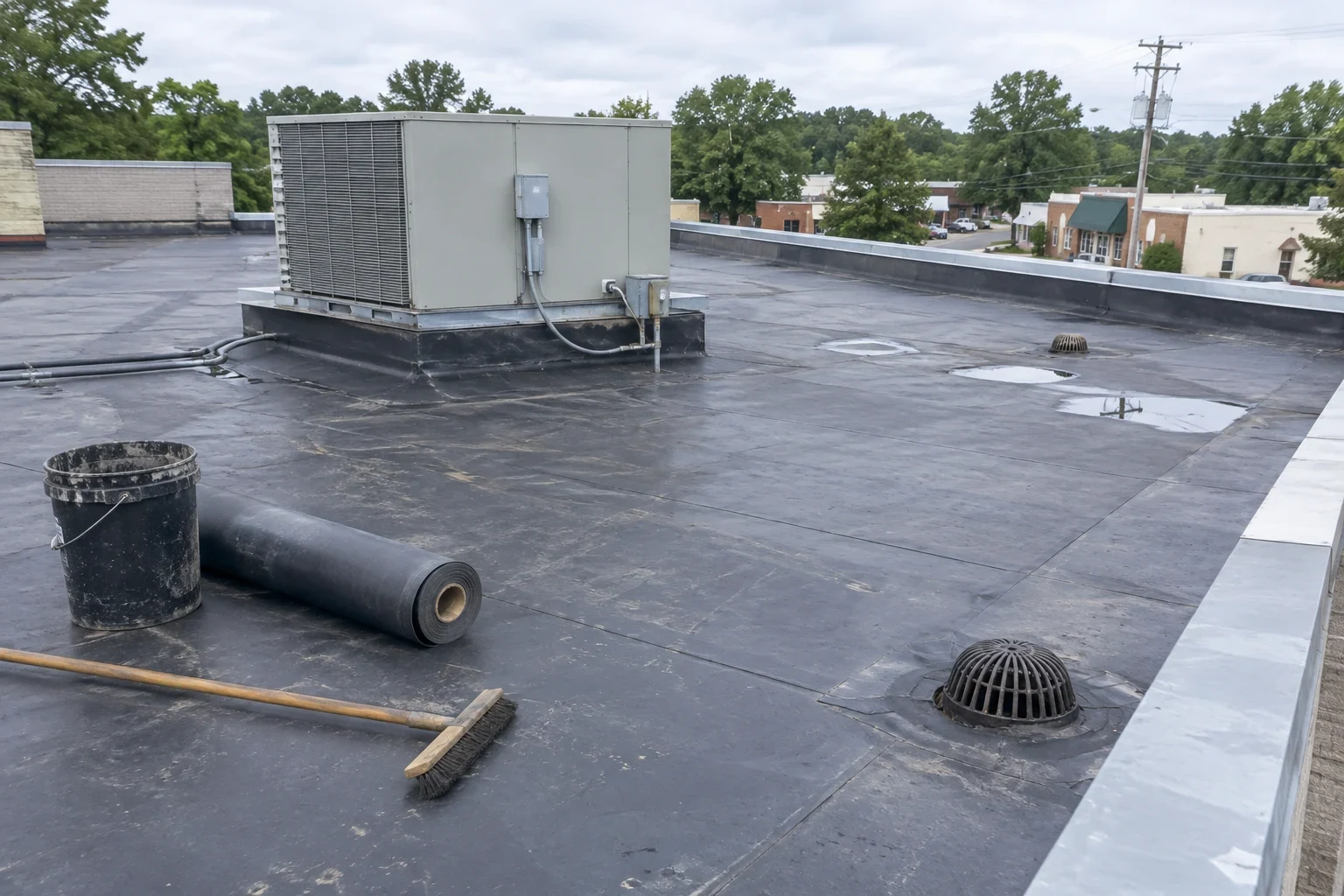
Ponding water shortens a membrane's life. We clear and reset drains and scuppers and can add tapered insulation to move water off areas where it sits.
Signs your commercial roof needs attention
Water that sits after rain
Ponds that remain two days after a storm point to sagging decking, blocked drains or settled insulation. Standing water breaks down seams and adds weight the structure was not designed to carry.
Discolored ceiling tiles
A tan or brown patch on a drop ceiling is usually what staff notice first. Once it appears, the insulation overhead has often been soaking up water for some time.
Seams lifting or blistering
Open laps, bubbles in the membrane or cracked surface coatings mean the waterproofing layer is starting to separate.
Cooling bills creeping up
Wet insulation loses most of its value, and a dark roof surface stores heat. A space that is harder to keep cool each summer can be a roof problem as much as an equipment one.
Leaks around rooftop units
Equipment curbs and pipe boots move with vibration and heat. Sealant there dries out and cracks, and it is one of the most common sources of interior drips.
How a commercial job runs
- 1
Inspection on the roof
We walk the whole surface, check drains, seams and flashing, and look for signs of trapped moisture. You get a photo report of findings so you can see the roof for yourself.
- 2
A clear recommendation
We explain whether targeted repairs will do the job or whether replacement makes more sense, and we give you a written, line-item estimate with no padding.
- 3
Scheduling around your business
We plan the work with you so customers, staff and deliveries are disrupted as little as possible. Rooftop work is kept tidy, and the ground around entrances stays clear.
- 4
Work and closing walk-through
On replacements, we never leave a section open overnight. When we finish, we walk the roof with you, show you the completed details and haul away all debris.
What moves the price
Commercial roofs vary more than residential ones, so we price each job from what we see on the roof. The estimate you receive explains every line so nothing arrives as a surprise. Financing available through Acorn Finance can help spread the cost of a larger project.
- Roof area and layout
- Square footage matters, but so does the number of penetrations, curbs and parapet walls. Each one adds detail work.
- Condition underneath
- Soaked insulation or soft decking has to come out before a new membrane goes down. Core samples give us an early read on what lies below, and tear-off confirms it. Should the deck turn out worse than the cores suggested, we pause the job and send you pictures so you can decide how to proceed.
- Membrane and insulation choice
- TPO, EPDM and modified bitumen differ in cost and lifespan. Adding insulation thickness raises the upfront price and can lower what you spend keeping the building cool or warm.
- Access and equipment
- Roof height, ladder and crane access, and how materials reach the roof all affect labor time.
Commercial roofing questions
Something not covered here? (919) 646-2324
Can my flat roof be repaired, or does it need replacing?
Often it can be repaired. When the trouble is limited to a few open laps or tired flashing, fixing those details can keep the membrane working well for a good while longer. When water has worked its way through much of the insulation, patching only postpones the bigger job. Our inspection tells you which case applies, and the photos let you see it for yourself.
Will a white roof actually lower my cooling costs?
On a single-story building with a large roof area, a reflective membrane usually reduces the heat reaching the space below during summer. How much depends on your insulation, equipment and how the building is used. We give you an honest read rather than a promise.
Which kinds of commercial roofs do you work on?
We focus on flat and low-slope roofs over existing shops, offices and small commercial buildings. That includes TPO, EPDM and modified bitumen systems, along with the flashing, drains and edge metal that go with them. Our work is repair, drainage correction and full roof replacement.
Can my business stay open during the work?
Usually, yes. Materials are kept clear of your doors and parking, the work area stays roped off, and the loudest tear-off happens during hours you pick. We talk through the schedule with you before anything starts.
Can you help if a storm damaged our roof?
Yes. We document the damage with photos and offer adjuster meetings and help through the insurance claim process. Our Storm Damage Repair page covers how that works in more detail.
See what your roof is doing before the next leak
We will inspect your commercial roof at no charge and send you a photo report of what we find. Then you can decide on the next step with the facts in front of you.